What Is A Sponge Filter?
A Sponge Filter is a type of filter used in aquariums. They are inexpensive to buy and maintain and are easy to use. They utilise air from an air pump to draw water through the sponge, thus filtering the water.
How Does A Sponge Filter Work?
A Sponge Filter is made from a cylindrical piece of foam and an air driven lift tube. The air driven lift tube is placed in the centre of the foam and draws water through the foam and up the uplift tube.
The air driven lift tube works by using an air pump to pump air into the bottom of the lift tube. As the bubbles inside the lift tube move to the surface, they draw up water behind them. This results in water flowing up and out the tube.
The movement of water up the lift tube draws water through the foam of the sponge filter into the bottom of the uplift tube.
As the water passes through the foam the water if filtered. The filtering of water is both mechanical and biological.
- Mechanical filtration - pieces of debris will be trapped by the foam.
- Biological filtration - beneficial bacteria live and populate within the Sponge Filter foam. These beneficial bacteria break down toxic Ammonia to Nitrite and then to Nitrate which is far less toxic to fish.

Different Types Of Sponge Filters
Standard Style Sponge Filter In Different Sizes
The standard or regular Sponge Filter has a heavy base so that it stays in place under water. It then has a cylindrical piece of foam with an uplift tube rising up from the middle.
These Sponge Filters are available in a number of size variations from small ones which are often shorter and narrower to large ones which are wider and taller.
Side Mount Directional Sponge Filters
Sponge Filters also come in a side mount style with a directional uplift tube which allows you to direct the flow of water.
Sponge filters can be purchased from from Amazon and many varieties are avalable:
Remember you will also need an air pump and air line tubing to connect to and run your sponge filter.

Setting Up A Sponge Filter
Setting up a Sponge Filter is very easy. Connect air line tube from an air pump to the uplift tube of the sponge filter.
For the regular style Sponge filters this can require removing the uplift tube, putting the airline tube through the uplift tube and connect the air line tube to the fitting, then place the uplift tube back in position.
How to Clean Sponge Filters
Cleaning a Sponge Filter is simple. Remove the filter from the aquarium and squeeze it out in a bucket of dechlorinated water.
It is most convenient to do when doing a water change, just squeeze out the Sponge filter in a bucket of old aquarium water.
Once the Sponge Filter has been squeezed out it can be placed back in the aquarium.
Note: Do not use tap water to clean your Sponge filter as the chlorine will kill off the good bacteria that has established in the sponge which performs the biological filtration.
What Are The Advantages Of Sponge Filters?
Some of the advantages of Sponge Filters which make them so popular are:
- They are inexpensive to buy
- They are inexpensive to run - air driven from an air pump and many can be run from a single air pump
- They are simple yet effective - no moving parts
- They have a gentle water flow which is great for fry or sensitive species like shrimp and bettas that can be stressed or injured by water flow
- They are safe for fry and baby fish – fry will not get sucked into them
- The sponge surface area houses micro-organisms which are great food for fry and shrimp
- They are easy to maintain and clean
- As they are air driven they help to oxygenate the water
What Are The Disadvantages Of Sponge Filters?
Some disadvantages of Sponge Filters are:
- They take up room in the aquarium
- To clean them you need to remove them from the aquarium, although this is very easy
- Limited flow and circulation, so may not be suitable for larger tamks or multiple sponge filters may be needed
- They can be noisy as they run on air and make a bubbling sound
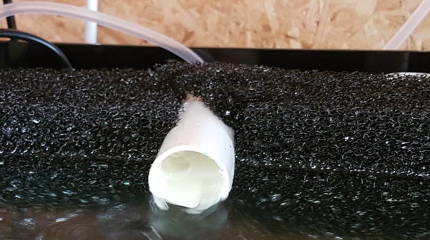
Sponge Filter VS Matter Filter
| Matten Filter | Sponge Filter | |
|---|---|---|
| Easy and inexpensive to make? | ✓ | ✓ |
| Inexpensive to run? | ✓ air driven via air pump | ✓ air driven via air pump |
| Can hide heaters and other equipment behind them? | ✓ | ✗ |
| Safe for fry and baby fish? | ✓ | ✓ |
| Effectiveness? | ✓ Yes, very large surface area | ✓ Yes but in large tanks might require more than one |
| Ease of cleaning? | ✗ A bit difficult need to remove from aquarium | ✓ Easier than Matten filter as they are generally smaller and not fixed in position |
I use both Sponge Filters and Matten Filter, I would not say one is overall better than the other it really depends on your scenario.